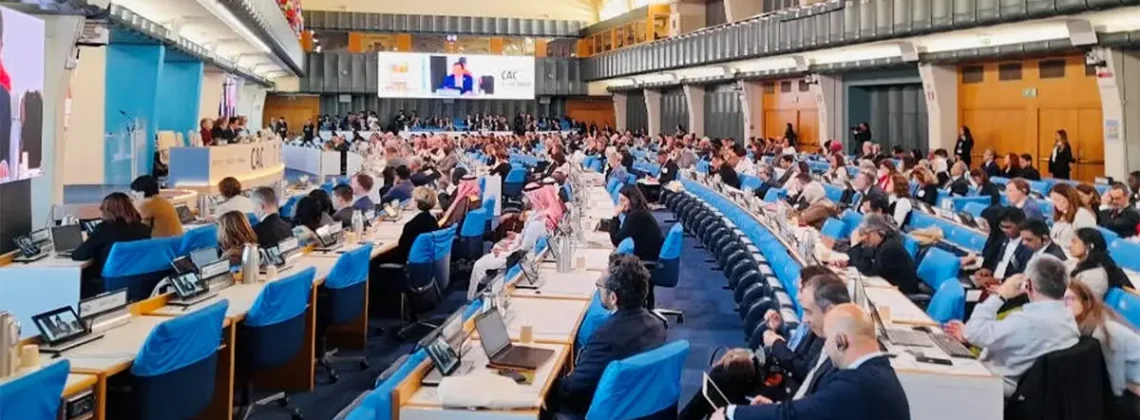
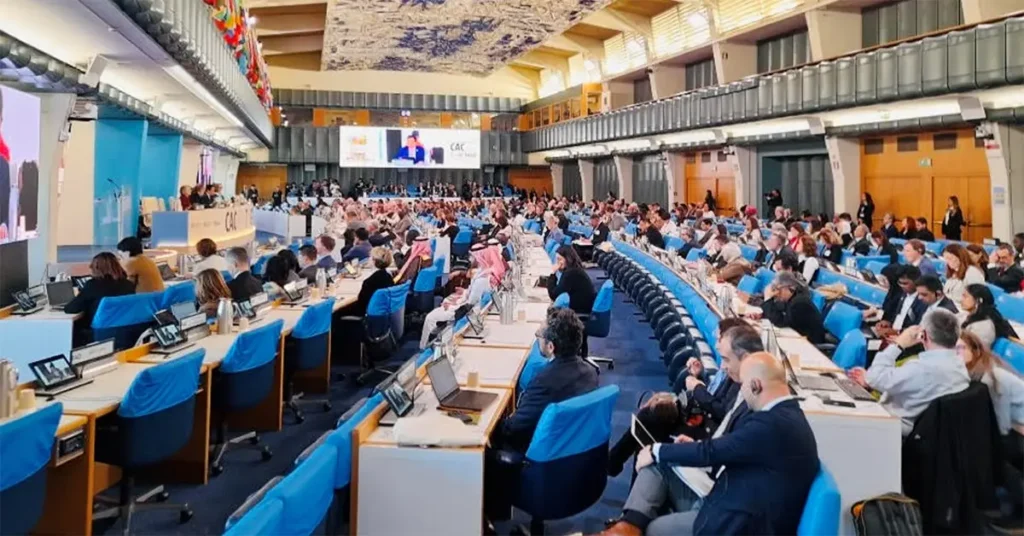
FAO Headquarters, Rome, Italy
On behalf of the National Health Federation (NHF) and its members, I began the week of November 9, 2025, with a flight to Rome, Italy, and then a very long day on Monday, November 10th, representing consumer health interests at the week-long 48th session of the Codex Alimentarius Commission (CAC). Surprisingly for a CAC meeting, NHF appears to be the only consumer organization present in person.
The biggest concern for NHF at this meeting was the lengthy laundry list of nasty pesticide Maximum Residue Level (MRL) standards that the Codex Committee on Pesticide Residues (CCPR) decided to drop in the laps of the CAC delegates to approve for advancement up the 8-step ladder at Step 5/8 on their way to final adoption at Step 8. Unsurprisingly, most of the delegates seemed to think this was a great idea. This includes, by the way, the “untouched by MAHA” American delegate who was instructed to support the MRLs’ advancement.
The European Union (EU) delegate, though, spoke out strongly against some 23 of these pesticides, and was joined in its opposition by Egypt, Norway, and Switzerland. The EU’s written comments stated its case more completely than the EU could verbally in the two-minutes of restricted time allotted to all delegates for speaking.
After several countries had spoken, Vice-Chairwoman Dr. Jing Tian, who was chairing this agenda discussion, next called on NHF to take the floor, and I roughly argued as follows:
“Thank you, Madame Chairwoman. The NHF supports and appreciates the positions of the EU, Norway, Switzerland, and Egypt on these pesticide levels. We have set forth our arguments against advancing any of these pesticide-level standards at length in CRD 8, which we hope all of you will read.
“But let me point out here that pesticides are greatly overused. In 1960, 196 million pounds of pesticides were used annually in agriculture. By 2022, that amount had ballooned to 8,157 million pounds of pesticides. This is unsustainable!
“The sad thing is that only 0.3% of pesticides applied actually reach the targeted pest. The rest go into the environment where they persist. Despite all of this, there are some who insist that Codex approve even more pesticides and at a faster pace. This is madness! If anything, Codex must remove from its approved list, at least 1-2 old pesticides for every new one that it adopts. I ask that NHF’s comments here be reflected in the Report.”
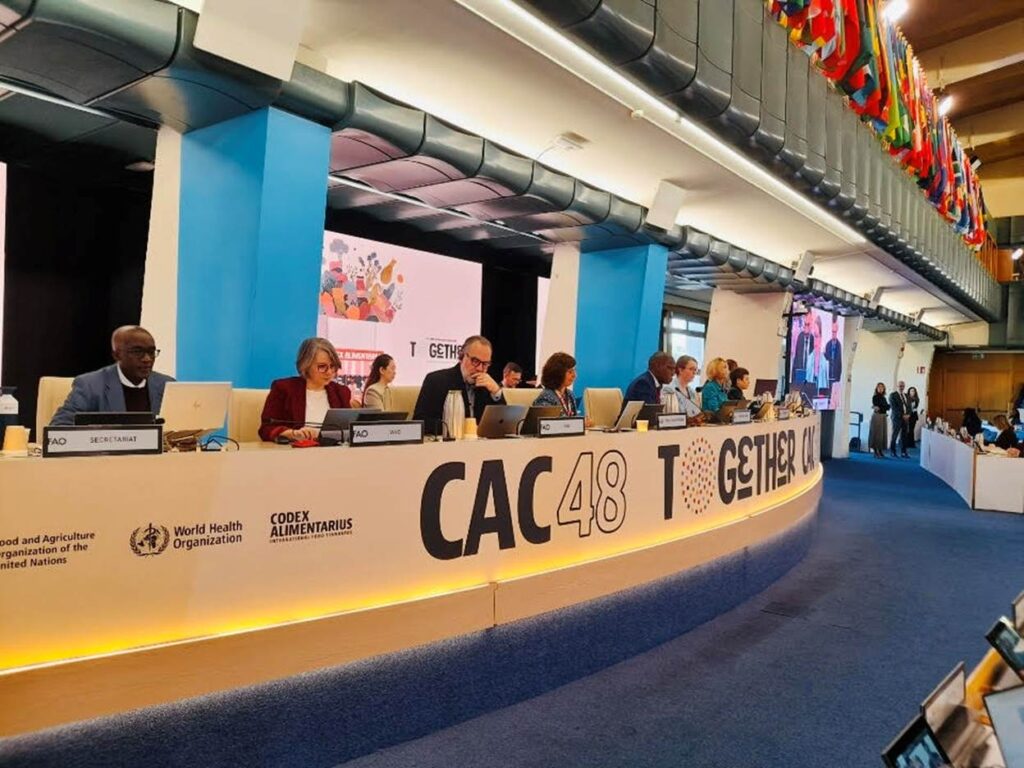
Even if your own government representative fails you at Codex, you can count on the NHF to speak out for you and be heard. And because of one donor, who wishes to remain unnamed, NHF is here for you at this Codex meeting, despite my recent, wide-ranging trips from Vienna to Washington to Nevada and to Brussels before this!
Our NHF Articles Editor Katherine Carroll is reviewing a major book on Parkinson’s Disease called The Parkinson’s Plan; A New Path to Prevention and Treatment by Ray Dorsey, M.D., MBA and Michael S. Okun, M.D. It is a highly recommended book and will make you realize how vital it is to stop the insane authorization and ubiquitous use of pesticides, which damage the Dopamine-producing cells that are lost in Parkinson’s disease. These pesticides can be inhaled, contaminate groundwater, and injure us by direct contact. NHF’s work at Codex Commission and committee meetings handling pesticide residues is therefore vital. Most of us have a friend or loved one whom we have watched suffer the debilitating effects of Parkinson’s disease cruelly robbing them of their life and slowly starving them to death as they can no longer swallow.
With Codex servilely bowing to the incessant demands of the pesticide industry for approval of its latest bug (and people) killers, this existential threat to humanity must be stopped or at least far-better controlled. Our health and our lives depend upon it.
In the event, CAC48 advanced to Step 5/8 all of the pesticide MRL standards, thereby thwarting NHF’s and the European attempts to block these nasty compounds from the environment. However, not all was lost as the Codex Secretariat announced that 355 of the older pesticide-residue standards were to have their adopted status revoked, with no objections from the delegates. Most probably, many of these pesticides had gone off-patent and were far less profitable than the new ones set to become Codex-approved.
Thanks again to all of our NHF members and supporters who helped make this participation in the Codex meeting possible. For those who wish to support our work, give now to make sure your Voice is represented! And if you are not yet a member of NHF, you are missing your chance to change the World.