
NHF representing you at the 49th session of the Codex Alimentarius Commission
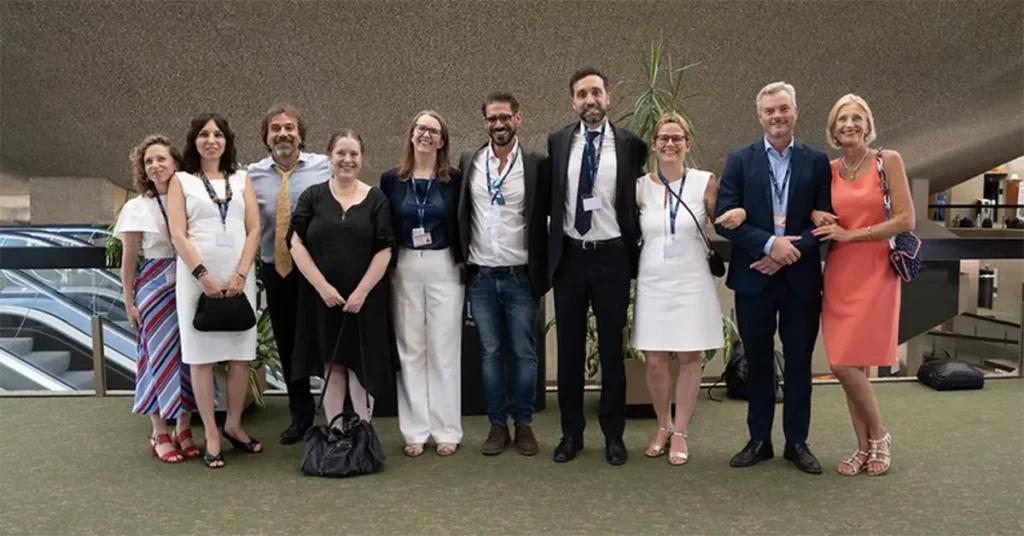
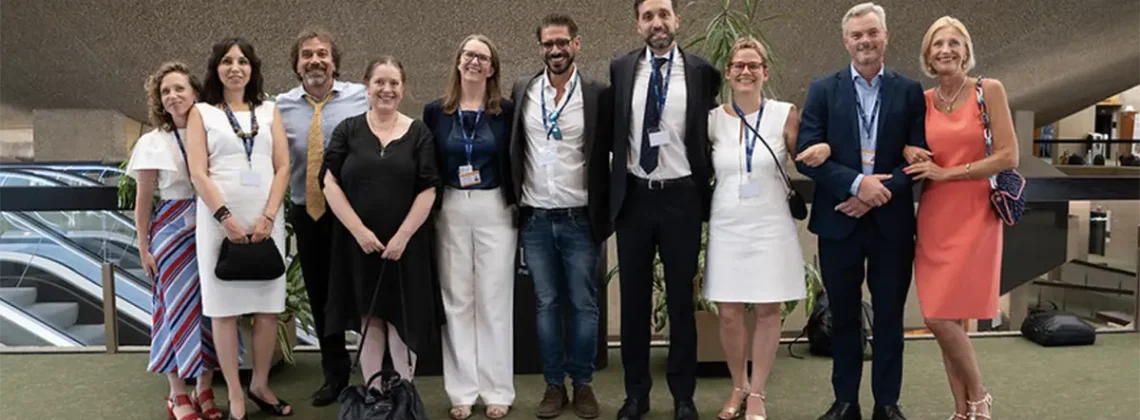
On behalf of the Codex-accredited, international health-freedom organization the National Health Federation, I flew to Geneva, Switzerland in early July 2026, where I was met by NHF Board member Matt Warnock and local NHF member Amanda Dubaic, who with me – and then, later, Serbian member Nina Matijašević – comprised our NHF delegation to the 49th session of the Codex Alimentarius Commission (CAC49). The meeting was held from July 6th-10th and was populated by several hundred member-state and other delegations.
The first meeting day on Monday was the most contentious, but that was not much by historical standards. Early on in the meeting, my attempt to change some wording in vet-drug applications for Codex science review so that manufacturers would have to submit more supporting data was shot down in flames because the CAC Chairman could not be bothered to slightly alter wording that he considered already baked-in. The wording that was approved said (in part) “5. Additional information (optional), such as an initial assessment of whether the nomination is likely to meet the agreed approach for extrapolation of MRLs of veterinary drugs to one or more species.”[1] I had suggested that the word “optional” be replaced by “where applicable” so as to remove the option for manufacturers to withhold possibly pertinent and important information. No country supported my proposed word change.
The Old “Emergency” Trick
Later in the day, the Commission considered a proposal for new work on a Guideline that had floated up from the Codex Committee on Food Labeling (CCFL) called “Guidelines on application of food labelling provisions in emergencies.” It would loosen labeling requirements on packaged foods during “emergencies.” Some brainiac somewhere had decided that during an emergency the most important thing to do was not to rush emergency supplies to the scene of the emergency but rather to take the time to design and print new labels with less information on them, apply them to the product, and then send them to the site. I am not making this up.
Since this would also affect infant-formula labeling, the trio of consumer organizations focused on such formulas – the International Lactation Consultants Association (ILCA), the International Baby Food Action Network (IBFAN), and ENCA – jumped on this part of the Guidelines without mercy.
ILCA started first, followed by ENCA and then IBFAN. All three made telling points. ENCA, in particular, argued that “the Guidelines on the Application of Food Labelling Provisions in Emergencies should be strengthened before adoption to ensure that formulas and foods for babies are specifically excluded and that the Code of Ethics for International Trade in Food including concessional and food aid transactions is included in the text.”
NHF argued against the proposed new work, stating among other things that “medical emergencies are great excuses for ditching consumer protections” and that “if you have time to change a label, then it’s not an emergency!” NHF argued this and more both at the plenary session and at a side event on Thursday when the topic flared up again.
The country of Cape Verde Islands was the only country delegation brave enough to speak up against this nonsensical guideline, followed by the WHO Science Officer who powerfully argued against the guideline as well. The CAC Chairman, obviously disturbed by this opposition, turned to the Canadian chairman of the CCFL, Parthiban Muthukumarasamy, for support and to see if he could put lipstick on this pig.
But what followed out of Muthukumarasamy’s mouth was not a coherent, well-reasoned reply but rather a sloppy word-salad of bureaucratese and buzz words that were complete nonsense and non-responsive. It was so bad that in comparison it makes Kamala Harris look like the most articulate orator since Demosthenes. Seizing on the Codex catch-phrase of “capacity building,” Muthukumarasamy repeatedly threw that phrase out to the delegates as if capacity building was the answer to the many innate problems with the emergency labeling guidelines, including an absence of important label warnings.
Capacity building wasn’t even close to being the answer, but the CAC Chairman readily accepted that so-called explanation without any apparent discernment and then turned to the Cape Verde delegate to ask if she would “reserve her country’s right” to not implement this guideline. That subtle manipulation is the old trick that Codex chair people are trained to pull on naïve delegations. Instead of standing on their opposition to any standard, guideline or other work of Codex, the delegates succumb to the gentle offers of chairmen and -women to “reserve their rights,” which means that the standard or guideline can continue to advance up the 8-step ladder to adoption.
Codex chair people effectively sideline and neutralize any opposition by diverting it into a cul-de-sac “reservation” that will avoid any sustained opposition. Inexperienced delegates routinely fall into this trap, which is what happened this time with Cape Verde.

And need I even add that the U.S. Codex delegation – completely untethered at this meeting from any MAHA connection or even sentiments – backed the Canadian “explanation” and the proposed new work on this labeling guideline for emergencies? I can tell you that, unequivocally, MAHA is dead as a doornail at Codex meetings. It’s still business as usual. Codex is a factory, busily churning out new standards and guidelines regardless of their merits or the harm they might cause, and the United States of America government supports that machine. Trump or no Trump. Kennedy or no Kennedy.
Bacteriophages
Bacteriophages are viruses that infect bacteria. They are ubiquitous in agriculture and pose problems in the dairy industry by interfering with the bacteria used to make cheeses. Now, one country has proposed new work be done on bacteriophages at the Codex level as a means to address the global, antimicrobial-resistance problem.
From the CAC49 Report, paragraph 212, “Chile … informed CAC49 that it was developing a proposal for new work on guidelines for the production of bacteriophages for use in the food chain. Noting that the use of bacteriophages can contribute to strengthening food safety management and support strategies aimed at mitigating antimicrobial resistance, Chile indicated the challenges in establishing regulatory frameworks due to a lack of international references. This initial information was provided with a view to strengthening the development of the new work proposal prior to its formal submission within the Codex framework.”
But Chile is badly misinformed. A lack of “international references” is the least of Chile’s problems when it comes to proposing the introduction of bacteriophages into our food supply. There is a risk that bacteriophages could facilitate the transfer of antibiotic resistance genes or virulence factors between bacteria through horizontal gene transfer.[2] This process, known as transduction, could potentially transform non-pathogenic bacteria into harmful strains or enhance the pathogenicity of existing pathogens.
Further, bacteriophages face significant challenges in outdoor agricultural settings due to UV radiation, desiccation, and temperature fluctuations, which can rapidly degrade their viability.[3]
More importantly, though, the uncontrolled release of large quantities of specific phages could alter natural bacterial communities and microbial balances in soil or plant surfaces.[4] This, in turn, could lead to the persistence of bacteriophages in the environment with a potential long-term impact on the gut microbiota of animals or humans consuming treated products.[5]
Given scientists’ less-than-sterling role in ecologically guarding the Planet, this proposed new work looks more like a recipe for disaster than any solution to antimicrobial resistance. Besides, if Chile really wants to suppress antimicrobial resistance, then all it would need to do is join with NHF in reducing and then eventually eliminating glyphosate-based herbicides, which are the real driving force behind such global resistance.
Other Issues
CAC49 spent a lot of time going through the work of its many committees. Of course, all, or nearly all, standards and guidelines presented to CAC49 for advancement or approval by the committees got just that. There exists a heavy bias at Codex in favor of advancing all standards and guidelines to final adoption. It could be the most worthless standard on Earth – such as the one for Maximum Permitted Levels of vitamins and minerals – and yet it will still get adopted.
One committee, the Codex Committee for Fish and Fishery Products (CCFFP), had been ably hosted by Norway for 60 years. At this meeting, though, Norway resigned its committee hosting duties, with both Spain and South Korea offering to take over Norway’s hosting duties. Since there were two contenders, the Chairman called for a vote by ballot, which Spain won. That was good for NHF since it is cheaper and easier to get to Spain than to Korea for that committee’s meetings.

The Commission members also spent a lot of time on the Final Implementation Report for the just completed Codex Strategic Plan 2020-2025.[6] This is where they meticulously comb through the previously laid-down plans and goals to see if they had been met. Since the Report is quite lengthy, I would suggest that those interested in its content read it directly at the link in Endnote 6 of my article here.
Don’t Get Me Wrong
Don’t get me wrong. The CAC Chairman is smart as a whip, has an impeccable sense of timing, and correctly defers to the Codex Secretary whenever he judges that her experience and knowledge on an issue are greater than his own. He is a humble man and has always treated NHF fairly. But he is single-mindedly focused on getting Codex standards and guidelines adopted.
He is not alone either. I have counted at least eight traps that the Codex Commission and its committees have fallen into, and one of the worst of these is this blind and bull-headed determination to push all standards and guidelines through to adoption no matter how flawed they might be. Most Codex delegates blindly join in with the Chairman in pushing them towards adoption.
Many Codex standards and guidelines are good, but many are not. The latter ignore detrimental synergistic effects on humans, animals, insects, and the environment in general. Most important of all, they reflect the modern-day scientific hubris that thinks it knows more than Mother Nature. It doesn’t, not by a long shot.
There Is No Such Thing as Solutions
Economist Thomas Sowell observed that there are never solutions, there are just tradeoffs. You trade one problem for another. You spray weeds with Roundup, and you get rid of one problem, but now you have another – a poisoned soil that kills insects and eventually you with a degenerative disease.
Codex tries to arrive at solutions without realizing that by doing so, they are creating other problems. Codex must tread more carefully. Speed is its enemy, not its friend.
There Are No Great Men
Over my 26 years at Codex, some have lauded my efforts at Codex, even calling me “great.” But there are no great men. There are only Great Challenges that ordinary men and women, like you and me, are forced by circumstances to meet. We do our best, because that’s all we can do. And we trust that that will be good enough to make a difference.
[1] See CX/CAC 26/49/2 Appendix II.
[2] See, e.g., Ranveer S, Dasriya V, Ahmad M, et al., “Positive and negative aspects of bacteriophages and their immense role in the food chain,” npj Sci Food 8, 1 (2024). https://doi.org/10.1038/s41538-023-00245-8, at https://www.nature.com/articles/s41538-023-00245-8.
[3] Halawa E, “Challenges of bacteriophages application in controlling bacterial plant diseases and how to overcome them,” J Genet Eng Biotechnology, 2023 Oct 10;21:98, doi: 10.1186/s43141-023-00549-y, at https://pmc.ncbi.nlm.nih.gov/articles/PMC10564689/.
[4] Roth A, Franz C, Hertwig S, et al., “Limitations and safety aspects related to the use of bacteriophages in food production,” FEMS Microbiology Reviews, Volume 50, 2026, fuag002, https://doi.org/10.1093/femsre/fuag002, at https://academic.oup.com/femsre/article/doi/10.1093/femsre/fuag002/8431391?login=false.
[5] Ibid.; see also, Trząskowska M, Naammo E, Salmon M, et al., “Risk Profile of Bacteriophages in the Food Chain, Foods 2025, 14(13), 2257, https://doi.org/10.3390/foods14132257, at https://www.mdpi.com/2304-8158/14/13/2257.
[6] Final Implementation Report for the Codex Strategic Plan 2020-2025, at fao.org/fao-who-codexalimentarius/sh-proxy/en/?lnk=1&url=https%253A%252F%252Fworkspace.fao.org%252Fsites%252Fcodex%252FMeetings%252FCX-701-49%252FWorking%2Bdocuments%252Fcac49_15e.pdf.